Organizational Stress & the First Responder
Updated: Sep 11
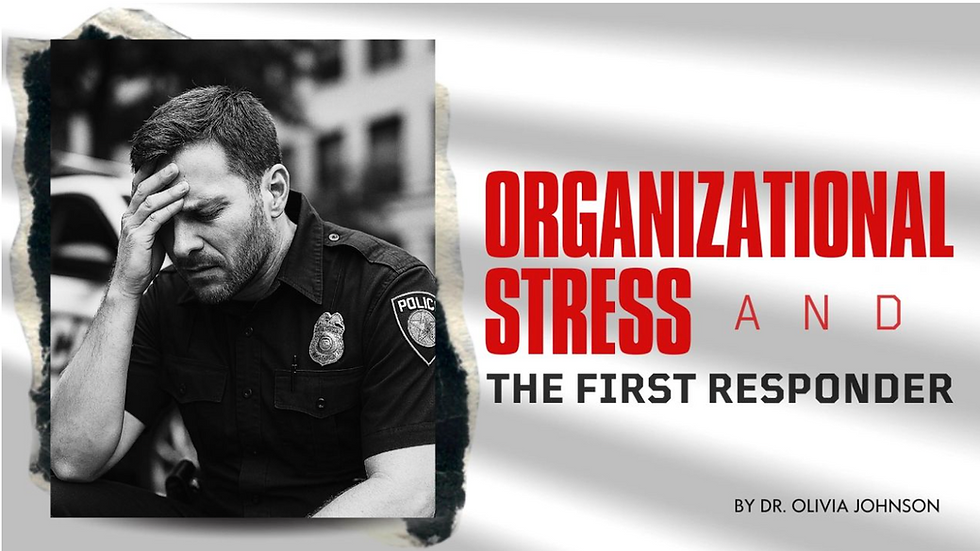
First responders face incredible challenges, from responding to emergencies that demand physical endurance, emotional resilience, and mental strength. However, organizational stress—the pressures from within their agencies—can be just as damaging as the traumatic events they encounter in the field.
While many focus on the dangers of the job, stressors such as excessive administrative burdens, inadequate leadership, poor communication, and lack of mental health resources often contribute to burnout, low morale, and decreased job performance. Shift work, long hours, and fatigue compound these issues, leaving first responders physically and emotionally drained.
To combat organizational stress, agencies must proactively support their personnel by fostering a culture of open communication, strong leadership, and peer support. Implementing mental wellness programs, crisis intervention training, and policies prioritizing employee well-being can significantly improve resilience and job satisfaction. Addressing organizational stress isn’t just about helping individuals—it strengthens entire agencies, leading to higher retention rates, improved job performance, and better service to the community. By caring for those who serve, we create a healthier, more effective workforce capable of meeting the job demands without sacrificing their well-being.
About Responder Health
Responder Health is a first responder health and wellness program dedicated to law enforcement mental health and the behavioral wellness of firefighters, EMS personnel, and their families. First responder family support is a core part of that mission — because no one carries this work alone. Through a peer support program, mental health resources, and a commitment to first responder wellness, Responder Health works to make sure no first responder faces their hardest moments alone. If you or someone you know is struggling — whether with grief, burnout, or the invisible weight of the job — reaching out to a mental health hotline is one of the most important steps you can take. Trained peer advocates are available around the clock. Call the Responder Health 24/7 Peer Advocate Hotline at 253-243-3701 — available 24 hours a day, 7 days a week.




Comments