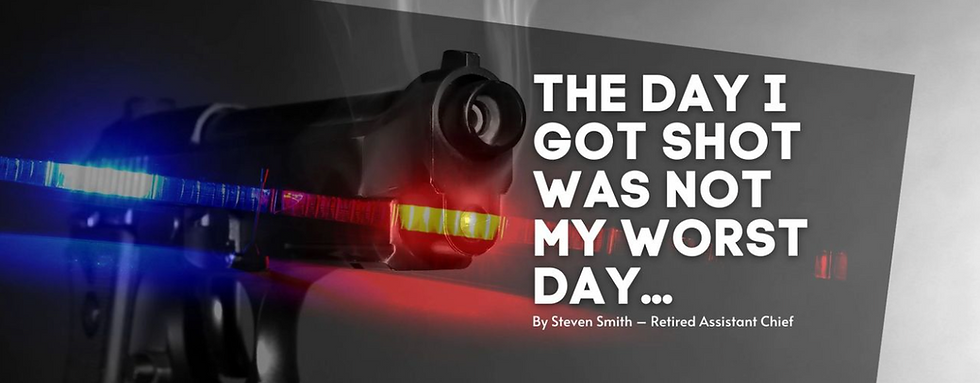
The day I got shot was not my worst day...
Updated: Sep 10
So what do you do when it happens? When the worst happens, what do you do? Have you ever wondered or asked that question? I wondered, but never allowed myself to delve too deep into it. That is until the worst happened.
Now I have had a lot of bad days and bad calls that have stayed with me and they probably always will. You know the ones, the ones that never quite go away, then become a part of you, even change the way you do things, but what do you do when you are the bad call? When the call goes bad and you become the call.
My worst happened on Dec 13, 2011. I became the call for help after my partner and I were ambushed. I was down and it was bad. Multiple bullet holes, broken bones, severe blood loss. The worst happened. You might think that would be the worst day, I used to think the same thing.
Dec. 13th was terrible, but the day after marked the worst day of my life. While that night was bad, the day after was worse. It took this long to realize that. The day after is when you come to realize everything has changed. The next day you see that nothing will ever be the same. The next day you realize you will never be like you were or what you were. The next day is when the real pain begins the pain that comes from working to get better. The next day is when the struggle begins, the struggle to find yourself, because the old you is no longer there. The next day is when you learn, you have to learn new ways to do everything. The next day is when the real battle begins. While you battled to survive that night, the war to live starts the next day. The next day you realize you will do all of these things for rest of your next days.
So the question is no longer what do you do when the worst happens, it’s how do you handle these next days, because there will still be a lot. Almost 8 years later I’m still having next day moments.
Next day moments can range from something as simple as avoiding grocery store because the parking lot is crowded and you really don’t feel like dealing or managing your way through that many people, to totally avoiding something because you know it will just trigger you and ruin your day. Next day moments can be a million different things.
You just have realize that those next days do not always have to remain bad days. You have a choice. Next days can be what you make them. Next days are just that, next days. Its up to you what you do with them.
About Responder Health
Responder Health is a first responder health and wellness program dedicated to law enforcement mental health and the behavioral wellness of firefighters, EMS personnel, and their families. First responder family support is a core part of that mission — because no one carries this work alone. Through a peer support program, mental health resources, and a commitment to first responder wellness, Responder Health works to make sure no first responder faces their hardest moments alone. If you or someone you know is struggling — whether with grief, burnout, or the invisible weight of the job — reaching out to a mental health hotline is one of the most important steps you can take. Trained peer advocates are available around the clock. Call the Responder Health 24/7 Peer Advocate Hotline at 253-243-3701 — available 24 hours a day, 7 days a week.



Comments