They Answered the Call — Every Single Day
Updated: Sep 11
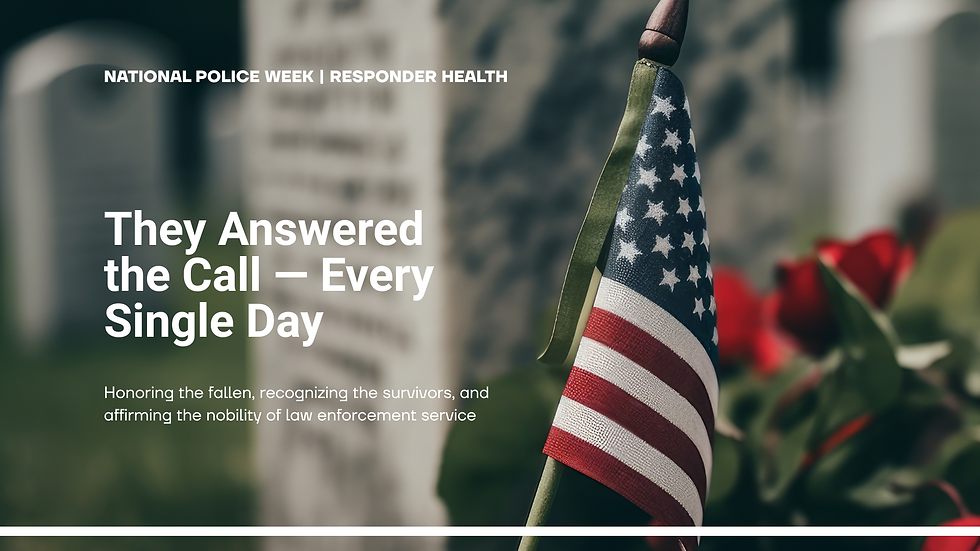
Every May, America pauses to observe National Police Week — a time set aside to honor the men and women of law enforcement who have given their lives in the line of duty, and to acknowledge the profound sacrifice carried by every officer who pins on a badge and walks out the door each shift. It is a week of solemn ceremony and quiet gratitude, folded flags and long silences, of names read aloud that deserve to echo far beyond the moment.
According to the National Law Enforcement Officers Memorial Fund (NLEOMF), 111 law enforcement officers died in the line of duty in 2025 — a 25 percent decrease from the 148 deaths recorded in 2024, and the lowest annual total since 1943. In any other context, those numbers might be cause for celebration. But in the world of public safety, they are something else entirely: they are 111 families changed forever, 111 smiles we miss, 111 empty chairs.
Each of those officers — federal, state, county, and municipal — left behind something that cannot be tallied in a report: partners who worked alongside them, communities that depended on them, families who loved them, and colleagues who will carry their memory every day they continue to serve. The NLEOMF has inscribed more than 24,000 names on the National Law Enforcement Officers Memorial in Washington, D.C. — a wall of sacrifice stretching back to 1786. Every name on that wall represents someone who answered the call when it mattered most.
"Each of the 111 fatalities we publish in this report represents a selfless sacrifice made on behalf of the community and the nation in which they serve." — NLEOMF CEO Bill Alexander
The Nobility of the Oath

There is a word that law enforcement rarely uses to describe itself: noble. Officers tend to be practical people — they do the job, they go home, they come back and do it again. But nobility is exactly the right word for what this profession represents. To voluntarily place yourself between harm and the public, to run toward the unknown while others run away, to hold the line on the worst days in people's lives — that is not ordinary work. That is a calling.
The 2025 NLEOMF data showed that officers were killed while doing the most fundamental parts of the job: investigating suspicious persons, making arrests, conducting traffic stops, responding to domestic disturbances, serving warrants. Not dramatic headlines, not extraordinary circumstances — just Tuesday. Just the job. That quiet, relentless dedication is the true face of law enforcement, and it deserves to be recognized for exactly what it is.
Despite the noise of public discourse in recent years, the reality is that most Americans do appreciate and respect their law enforcement officers. They appreciate the deputy who shows up at 2 a.m. when no one else will. They respect the officer who de-escalates a volatile situation before it becomes a tragedy. They are grateful for the sergeant who spends years in a community, learning its people, building its trust. Gratitude is not always loud — but it is real, and it is widespread.
For Those Who Remain: The Survivors
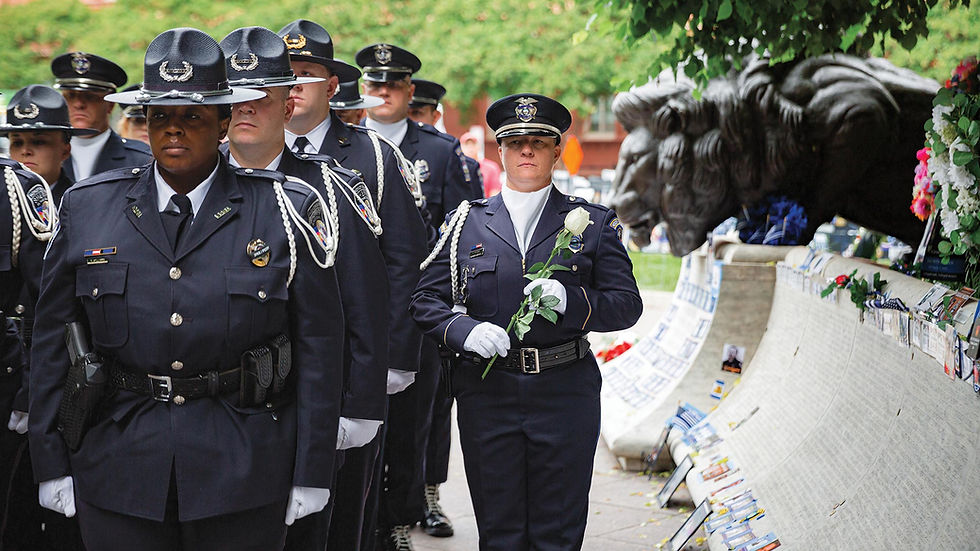
National Police Week is not only about the fallen. It is equally about those who survive them — the partners, the spouses, the children, the colleagues, the agencies left behind to mourn and still continue. Surviving loss in law enforcement is its own kind of strength. Grief in this profession does not get much runway. Shifts continue. Calls come in. The mission does not pause to accommodate heartbreak.
And yet survivors heal. They persevere. They find ways to carry the weight of loss while still showing up — for their families, for their agencies, for the communities their fallen colleagues died protecting. Many become advocates, peer support specialists, mentors, and voices for wellness. They transform grief into something that sustains others. That is a form of service that rivals anything that happens on the street.
The survivors who stay in law enforcement — who continue to protect their communities even after losing someone they worked beside — deserve recognition all their own. They chose to stay in the fight. They honored their fallen partners not just with words, but with continued action. Every shift they work is, in part, a tribute.
The survivors who stay in law enforcement — who continue to protect their communities even after losing someone they worked beside — deserve a recognition all their own.
A Nation That Sees You

If you are reading this as a law enforcement officer whether active, retired, or a volunteer— know this: the work you do matters. The sacrifices you make are not invisible. The community you protect, the colleagues you back up, the families you keep whole by doing your job well — they see it, even when they do not say it.
National Police Week exists because the nation understands, on some level, that what you do is extraordinary. The ceremonies, the vigils, the Blue Mass, the candlelight — these are not formalities. They are the country's attempt to say thank you in a way that comes close to meaning what it should. The names on the Wall in Washington are not just history. They are a covenant — a reminder of what this profession has always been willing to give, and a promise to the officers who serve today that their sacrifice will not be forgotten.
To every law enforcement officer who has lost a partner, a colleague, a friend, and who still got back in the car: we see you. To every officer who carries the weight of the job quietly, without recognition or fanfare: we see you. And to the families who support this mission from home — who provide first responder family support from behind the scenes — who say goodbye every shift and hope for the best: we see you too. And you have our eternal gratitude.
About Responder Health
Responder Health is a first responder health and wellness program dedicated to law enforcement mental health and the behavioral wellness of firefighters, EMS personnel, and their families. Through peer-based support, mental health resources, and a commitment to first responder wellness, Responder Health works to make sure no first responder faces their hardest moments alone. If you or someone you know is struggling with the loss of a colleague or family member, or carrying the invisible weight of the job, reaching out to a mental health hotline is one of the most important steps you can take. Trained peer advocates are available around the clock. Call the Responder Health 24/7 Peer Advocate Hotline at 253-243-3701 — available 24 hours a day, 7 days a week.
Learn more at responderhealth.com



Comments